
If you own a home on Long Island, you already know the roof over your head does more than keep out rain. It battles nor’easters, salty coastal air, humid summers, and icy winters – all in the same calendar year. So it’s no surprise that one of the most common questions local homeowners ask is: how long does a roof last on Long Island?The honest answer is, “it depends.” Roof lifespan on Long Island varies based on the material used, installation quality, ventilation, and how close your home sits to the coast. This guide breaks down what you can realistically expect from your roof and how to help it reach – or exceed – its full potential.

How Long Does a Roof Last on Long Island?
Long Island sits in a unique climate zone. Homes here deal with:
- High humidity in spring and summer, which can accelerate shingle deterioration and promote moss or algae growth
- Coastal salt air, especially in towns closer to the North or South Shore, which corrodes metal fasteners and flashing faster than inland areas
- Freeze-thaw cycles in winter, where water seeps into small cracks, freezes, expands, and widens them
- Strong coastal winds and nor’easters, which can lift shingles, loosen flashing, or cause outright storm damage
- UV exposure during long summer days, which dries out and breaks down roofing materials over time
All of these factors combine to make Long Island a moderately demanding environment for roofing — not as harsh as a hurricane-prone Gulf Coast state, but tougher than a mild inland climate.
Average Roof Lifespan by Material
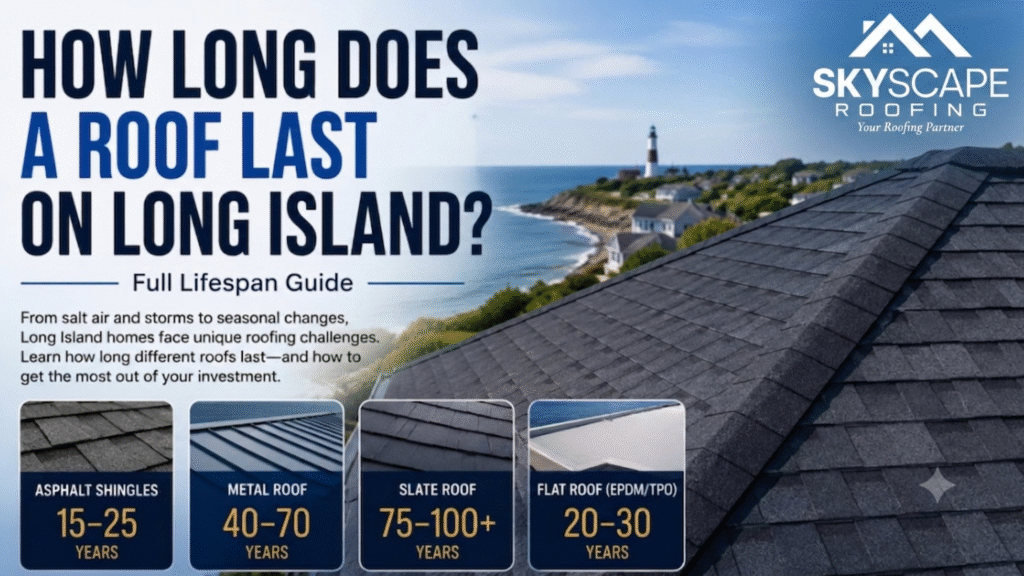
Here’s what homeowners can typically expect from common roofing materials when installed properly and maintained on Long Island:
- 3-Tab Asphalt Shingles: 15–20 years
- Architectural (Dimensional) Asphalt Shingles: 20–30 years
- Wood Shakes: 20–25 years, though coastal humidity can shorten this
- Metal Roofing: 40–60 years, one of the most durable choices against wind and moisture
- Slate Roofing: 75–100+ years, a premium option common on older Long Island homes
- Flat/Rubber (EPDM) Roofing: 20–25 years, popular for additions, garages, or modern builds
- Clay or Concrete Tile: 40–60 years, though less common due to weight and cost
Architectural asphalt shingles remain the most popular choice across Nassau and Suffolk counties because they strike a good balance between cost, durability, and wind resistance — an important factor given Long Island’s exposure to coastal storms.
Signs Your Roof Is Nearing the End of Its Life
Even a well-installed roof gives warning signs before it fails. Watch for:
- Shingles that are curling, cracking, or losing granules (you’ll notice granules collecting in gutters)
- Dark streaks or patches, which often indicate algae or moss growth
- Daylight visible through the attic roof boards
- Sagging areas on the roofline
- Frequent leaks or water stains on ceilings after rain
- Missing or damaged flashing around chimneys, vents, and skylights
- Rising energy bills, which can indicate poor attic ventilation or insulation caused by roof deterioration
If you notice two or more of these signs, it’s worth scheduling a professional inspection rather than waiting for a full leak to develop.
Factors That Can Shorten or Extend Roof Life
Not every roof of the same material lasts the same number of years. Several variables make a real difference:
- Installation quality: Even premium materials fail early if improperly installed
- Attic ventilation: Poor airflow traps heat and moisture, prematurely aging shingles from underneath
- Roof slope and design: Steeper roofs shed water and snow faster, reducing wear
- Tree coverage: Overhanging branches drop debris, hold moisture, and invite pests
- Maintenance history: Regular inspections and prompt repairs add years to a roof’s usable life
- Proximity to the coast: Homes near the Long Island Sound or Atlantic coastline experience faster wear due to salt air corrosion
Tips to Extend Your Roof’s Lifespan
Homeowners can take practical steps to maximize the return on their roofing investment:
- Schedule a professional roof inspection at least once a year, ideally in spring or fall
- Clean gutters regularly to prevent water backup and ice dams in winter
- Trim overhanging tree branches to reduce debris and moisture buildup
- Ensure proper attic insulation and ventilation to regulate temperature and moisture
- Address minor repairs immediately instead of waiting for them to worsen
- Remove moss or algae growth promptly using roof-safe treatments
- Hire a licensed, insured local roofer familiar with Long Island’s climate and building codes
When Should You Consider a Full Roof Replacement?
If your roof is approaching the upper end of its expected lifespan and showing multiple warning signs, replacement is usually more cost-effective than repeated repairs. A full replacement also gives you the opportunity to upgrade to more durable, storm-resistant materials – a smart move given Long Island’s exposure to coastal weather.
Many homeowners choose to replace their roof proactively before a major storm season, rather than reactively after storm damage forces the issue.
If your roof is approaching the end of its lifespan, the next question is whether repair can still buy you time. Our roof repair vs roof replacement guide walks through that decision.
Final Thoughts
Roof lifespan on Long Island depends heavily on the material you choose, the quality of installation, and how consistently you maintain it. While asphalt shingles remain the most common and budget-friendly option, materials like metal or slate offer significantly longer lifespans for homeowners willing to invest upfront. Regular inspections, prompt repairs, and proper attic ventilation go a long way toward helping any roof reach – or beat – its expected lifespan.
Frequently Asked Questions (FAQ)
Q: How long do asphalt shingle roofs last on Long Island? A: Most asphalt shingle roofs last between 15 and 30 years, depending on whether they’re 3-tab or architectural shingles, along with installation quality and maintenance.
Q: Does coastal air really affect roof lifespan? A: Yes. Homes closer to the Long Island Sound or Atlantic coast experience faster corrosion of metal fasteners and flashing due to salt air, which can shorten a roof’s effective lifespan.
Q: How often should I get my roof inspected? A: Most roofing professionals recommend at least one inspection per year, plus additional checks after major storms or nor’easters.
Q: Can I extend my roof’s lifespan without replacing it? A: Absolutely. Regular maintenance – including gutter cleaning, moss removal, ventilation checks, and prompt minor repairs – can add several years to your roof’s usable life.
Q: What’s the most durable roofing material for Long Island homes? A: Metal and slate roofing offer the longest lifespans, often 40 to 100+ years, making them excellent long-term investments despite higher upfront costs.
Q: How do I know if I need a roof repair or a full replacement? A: If damage is isolated (a few missing shingles, a small leak), repair is usually sufficient. If your roof is near the end of its expected lifespan and showing widespread wear, full replacement is typically more cost-effective long-term.
