
Planning a roof overhaul is one of the most critical investments you can make in your home. However, navigating the strict roof replacement building codes Long Island enforces can feel overwhelming. Because Long Island is split between Nassau and Suffolk counties-and further divided into distinct townships and incorporated villages-the building regulations, permitting workflows, and wind-load criteria can differ significantly from one neighborhood to the next.
Whether you live in the Town of Hempstead, Oyster Bay, or out in Brookhaven, failing to adhere to local building codes can lead to stopped work orders, hefty municipal fines, or denied insurance claims after a nor’easter.
Here is everything Long Island homeowners need to know about county building codes, township permits, maximum layer rules, and hurricane-rated wind standards before hiring a contractor.
1. Roof Replacement Building Codes Long Island: State vs. Town Rules
All residential roofing work across Long Island is governed at the baseline level by the Uniform Fire Prevention and Building Code of New York State (NYS Uniform Code), which adopts the International Residential Code (IRC).
However, New York grants local municipalities the authority to enforce these codes through their own building departments. In Long Island, roofing oversight is handled at the Town or Village level, not solely by county administrators:
Nassau County: Divided primarily into the Town of Hempstead, Town of North Hempstead, and Town of Oyster Bay, along with two cities (Long Beach and Glen Cove) and dozens of independent incorporated villages.
Suffolk County: Encompasses large townships such as Brookhaven, Islip, Babylon, Huntington, and Smithtown, as well as East End coastal towns like Riverhead, Southampton, and East Hampton.
If your home sits inside an incorporated village (such as Garden City in Nassau or Babylon Village in Suffolk), your local village building department often holds primary jurisdiction over the township.
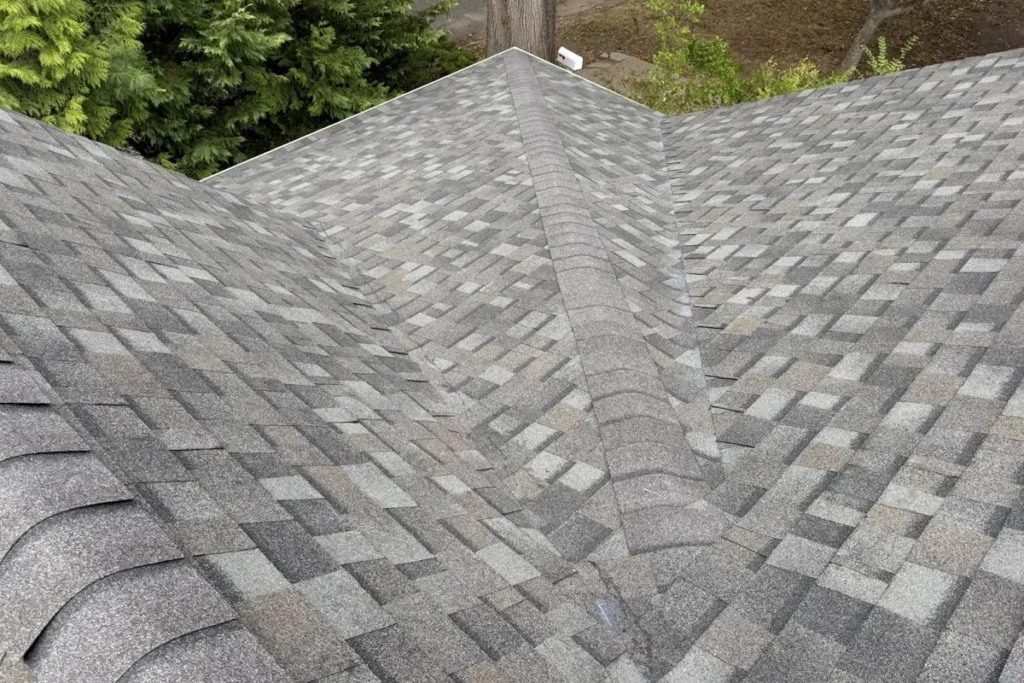
2. The 2-Layer Rule: Roof Recover vs. Full Tear-Off
One of the most frequently asked questions by homeowners is whether they can simply install a second layer of shingles over the existing roof (an overlay) to save on labor and disposal costs.
Before starting any project, reviewing residential roof replacement building codes Long Island guidelines prevents costly municipal code violations.
Under Section R908 of the NYS Residential Code and local Long Island enforcement:
Maximum of Two Layers: A roof recover (overlay) is strictly prohibited if the roof already has two or more applications of any type of roof covering.
Water-Soaked or Deteriorated Decking: Even if you only have one existing layer, code dictates that if the underlying wood sheathing (decking) is rotted, sagging, or water-damaged, a complete tear-off down to the rafters is mandatory.
Manufacturer Warranties: Major shingle manufacturers (such as GAF and Owens Corning) often void or restrict their top-tier warranties if shingles are applied over an old, uneven layer.
Local Pro Tip: Due to Long Island’s freeze-thaw cycles and seasonal humidity, traps of trapped moisture between two shingle layers can accelerate rot. Most licensed Long Island contractors strongly recommend a full tear-off regardless of whether a second layer is legally permitted.
3. Wind Resistance & Design Speed Standards
Long Island is designated as a coastal wind-borne debris region under ASCE 7 engineering standards. This means roofs installed in Nassau and Suffolk must withstand extreme uplift pressures during hurricanes and winter nor’easters.
Basic Design Wind Speeds: Depending on the exact zone and proximity to the coastline, Long Island roofs must typically be engineered to withstand ultimate wind speeds ranging from 115 mph to over 130 mph (especially along the South Shore and the East End of Suffolk County).
Fastener Requirements: Standard three-tab shingles nailed with 4 nails often fail to meet high-wind requirements. In most Long Island townships, roofing codes mandate heavy-duty architectural shingles secured with a 6-nail pattern per shingle in high-wind zones, along with enhanced starter strips.
Drip Edge Requirements: Approved corrosion-resistant metal drip edges must be installed at both the eaves and rakes to prevent wind-driven rain from penetrating the roof deck edges.
4. Ice Barrier & Underlayment Mandates
Given Long Island’s harsh winter freeze-thaw cycles, winter ice dams pose a severe threat to coastal homes. Building codes across both Nassau and Suffolk require robust underlayment protection:
Ice and Water Shield (Self-Adhering Membrane): In areas prone to ice dam formation, building codes require a self-adhering polymer-modified bitumen sheet extending from the lowest edges of all eaves to a point at least 24 inches inside the exterior wall line of the heated building space.
Valleys and Penetrations: Valley flashings, chimney saddles, and skylight perimeters must also be reinforced with ice-and-water barrier underlayment before final shingle installation.
5. Permitting Breakdown: Hempstead, Oyster Bay, & Brookhaven
Permitting processes vary depending on the municipality where your property is situated:
Town of Hempstead (Nassau County)
As the most populous township on Long Island, Hempstead enforces strict building and zoning oversight.
While standard like-for-like minor shingle repairs may not always demand a permit, major reroofing projects that involve replacing structural decking, rafters, or altering roof pitches require a permit from the Hempstead Department of Buildings.
Always verify whether your home falls under an incorporated village (e.g., Floral Park, Rockville Centre), which will have its own separate building inspector.
Town of Oyster Bay (Nassau County)
Stretching from the North Shore to the South Shore, Oyster Bay focuses heavily on structural integrity and coastal flood elevation compliance.
If a roof replacement involves structural wood modification, skylight additions, or rooftop solar panel installations, detailed architectural plans and a formal building permit are mandatory.
Contractors working in Oyster Bay must carry valid Town of Oyster Bay licensing and consumer affairs credentials.
Town of Brookhaven (Suffolk County)
Covering a massive geographic footprint from the Long Island Sound to the Atlantic Ocean, Brookhaven’s Building and Fire Prevention Department strictly polices wind compliance.
Permits are strictly enforced when re-decking or structural framing takes place.
Given the proximity to the coast, homes in Brookhaven’s coastal barrier zones must provide product approval documentation confirming adequate wind-uplift ratings.
6. County Consumer Affairs Licensing: Protecting Your Investment
Beyond physical installation codes, local county laws dictate who can legally perform roofing work on your property:
Nassau County: Contractors must hold an active Nassau County Office of Consumer Affairs Home Improvement License.
Suffolk County: Contractors must carry a verified license issued by the Suffolk County Department of Labor, Licensing and Consumer Affairs.
Hiring an unlicensed contractor not only puts you at risk of substandard work, but it can also void your homeowner’s insurance coverage if damage occurs as a result of unpermitted or code-violating construction.
