

Introduction: Why a Roof Inspection Checklist Matters for Long Island Homes
How closely have you checked the condition of your roof in the past year?
For homeowners in Long Island, roof inspections are not optional maintenance – they are a critical defense against coastal weather, seasonal storms, and long-term structural damage. Regular inspections also help homeowners know when to consult experienced roofing contractors Long Island for professional evaluation.
Quick answer:
A roof inspection checklist helps Long Island homeowners identify early warning signs of roof damage before wind, rain, snow, or ice turn small problems into costly repairs.
Long Island homes face unique stressors:
- Strong coastal and seasonal winds
- Heavy rain, Nor’easters, and tropical systems
- Snow, ice dams, and freeze–thaw cycles
- Salt air exposure that accelerates material wear
This guide explains:
- What homeowners can safely inspect on their own
- When a professional roof inspection checklist is required
- How regular inspections protect your home long-term
The recommendations align with best practices from the National Roofing Contractors Association and residential building standards.
What Is a Roof Inspection?
A roof inspection is a structured evaluation of your roof’s condition to identify damage, wear, drainage issues, and safety concerns before they escalate.
Homeowner Roof Inspection vs Professional Roof Inspection
Basic homeowner roof inspection
- Visual checks from the ground or attic
- Identifies obvious surface issues
- Supports routine monitoring between professional visits
Professional roof inspection
- Inspections are completed by licensed roofing professionals with backgrounds that include Residential & Commercial Roofing Solutions.
- Uses a detailed inspection checklist
- Detects hidden moisture, structural stress, and ventilation issues
- Provides written documentation and repair guidance
When Should You Inspect Your Roof in Long Island?
Long Island’s climate makes inspection timing essential.
Ideal roof inspection times
☐ Once per year (minimum)
☐ After major storms or high winds
☐ Before winter snowfall
☐ Before hurricane season
According to regional storm data from the National Oceanic and Atmospheric Administration, coastal homes experience higher wind and rain exposure – increasing roof stress and failure risk.
Exterior Roof Inspection Checklist (Homeowner-Level)
Safety note: Never climb onto the roof. Perform checks from the ground using binoculars.
Shingles and roofing materials
☐ Missing or lifted shingles
☐ Cracked, curled, or blistered shingles
☐ Bald spots where granules are missing
☐ Uneven wear patterns
Persistent shingle damage may signal the need for roof replacement, especially on older roofs.
Flashing and roof penetrations
Inspect around chimneys, vent pipes, and skylights:
☐ Gaps or separation
☐ Rusted or bent metal
☐ Loose sealant
Gutters and drainage
☐ Leaves or debris buildup
☐ Overflow stains on siding
☐ Loose, sagging, or detached sections
Poor drainage is one of the most common causes of roof leaks.
Interior Roof Inspection Checklist
Ceilings and walls

Inside your home, look for:
☐ Brown or yellow water stains
☐ Peeling paint or bubbling drywall
☐ Mold growth or musty odors
Attic inspection
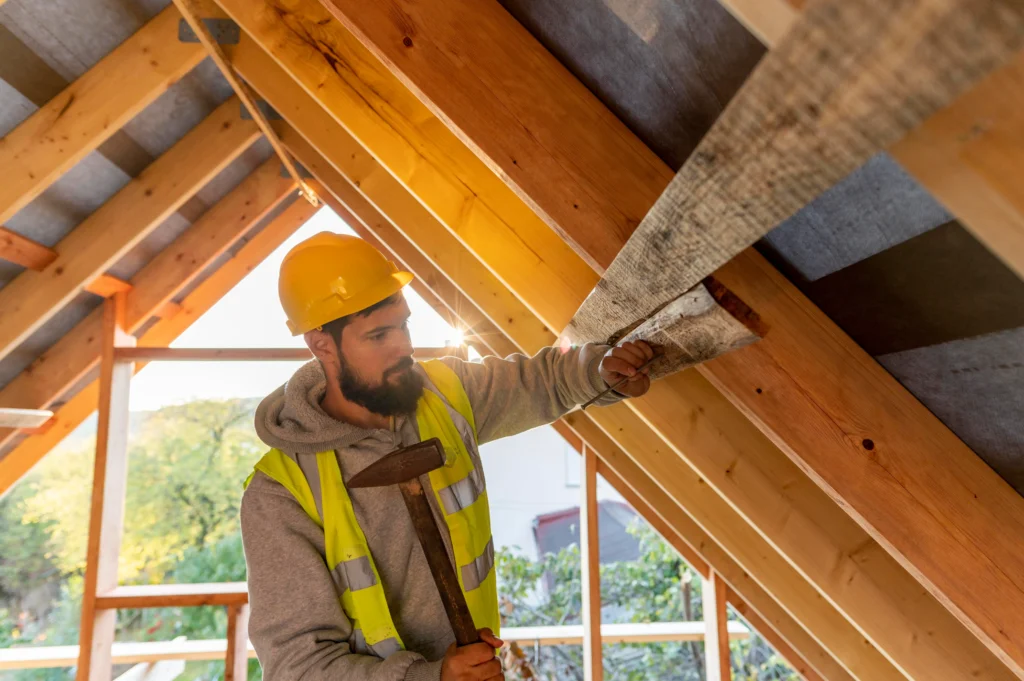
From the attic, check for:
☐ Moisture on wood framing
☐ Light shining through roof boards
☐ Wet, compressed, or moldy insulation
These interior signs often raise the question of Roof Repair vs Roof Replacement, depending on the extent of damage found.
Roof Inspection Risks Unique to Long Island Homes
Long Island properties face risks that inland homes often avoid:
- Salt air corrosion affecting flashing and fasteners
- High wind uplift on older shingle systems
- Ice dam formation due to poor attic insulation
- Aging housing stock (many homes built pre-1980)
- Flat and low-slope roofs common in Nassau and Suffolk counties
Homes with low-slope systems often require different inspection criteria than pitched roofs, especially when comparing flat roof vs shingle roof performance in coastal climates.
Signs You Need a Professional Roof Inspection Checklist
DIY checks are not enough if you notice:
☐ Leaks that keep returning
☐ Sagging or uneven rooflines
☐ Storm or hail impact marks
☐ An aging roof with widespread wear
A professional inspection confirms the cause, severity, and safest repair path.
What a Professional Roof Inspection Includes
A professional roof inspection follows a structured process:
- Structural review
Decking strength and roof alignment - Material condition assessment
Shingles, flashing, sealants, and fasteners - Moisture detection
Trapped water, leaks, and hidden damage - Code and safety review
Compliance with the International Residential Code - Documentation
Photos, written findings, and repair recommendations
How Often Should Long Island Homeowners Schedule a Roof Inspection?
Inspection frequency depends on roof age, material, and coastal exposure.
General guidance
- Newer roofs: once per year
- Older roofs (10+ years): twice per year
- After severe storms: immediate inspection
Salt air and wind shorten roofing lifespan in coastal environments like Long Island.
Roof Inspection Checklist After Storm Damage
After storms, perform a safe visual check for:
☐ Missing or scattered shingles
☐ Bent or detached flashing
☐ Ice buildup or heavy snow loads
If damage is visible, avoid climbing the roof and contact professionals. Storm safety guidance aligns with recommendations from the Federal Emergency Management Agency.
Common Roof Problems Found During Inspections
Roof inspections frequently uncover:
- Small leaks hidden beneath shingles
- Flashing separation near chimneys
- Blocked or insufficient ventilation
- Early-stage wood rot
Early detection significantly reduces repair costs and prevents full roof replacement.
How a Roof Inspection Helps Prevent Costly Repairs
A professional roof inspection checklist helps by:
- Catching damage early
- Extending roof service life
- Lowering long-term repair expenses
- Improving insulation and energy efficiency
The U.S. Department of Energy notes that roof condition directly affects energy loss and indoor comfort.
Choosing a Professional Roof Inspection Service in Long Island
Look for roofing professionals who offer:
- Valid licensing and insurance
- Proven Long Island experience
- Clear inspection reports with photos
- Honest, pressure-free repair guidance
Working with trusted roofing contractors long island ensures inspections are accurate, documented, and aligned with regional building conditions.
Conclusion: Protect Your Long Island Home With a Roof Inspection Checklist
A roof inspection checklist helps Long Island homeowners catch problems early – before weather, moisture, or time cause serious damage.
- DIY inspections support routine care
- Professional inspections uncover deeper risks
Regular roof inspections:
- Protect your home
- Reduce surprise repair costs
- Support long-term roof performance
Next step:
If your roof is over 10 years old or your home has experienced recent storms, scheduling a professional inspection can provide documentation, clarity, and peace of mind.
