
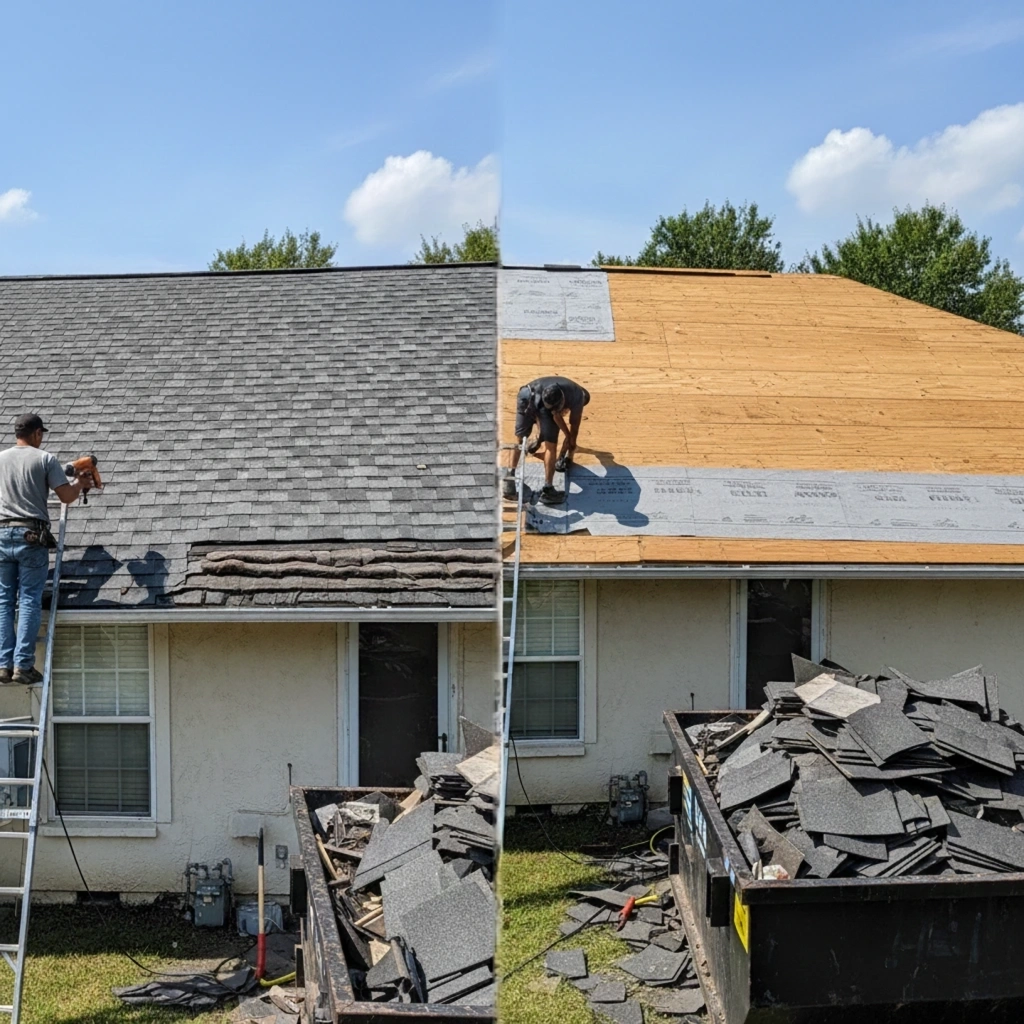
Choosing between roof repair vs roof replacement is one of the most important decisions homeowners make when protecting their property. The right choice affects safety, long-term costs, energy efficiency, and resale value.
While minor roof problems can often be repaired, ongoing or widespread damage may require a full replacement. Making the wrong decision can lead to recurring leaks, structural deterioration, and higher expenses over time.
This guide explains:
- When roof repair is sufficient
- When roof replacement is the smarter investment
- How professional roofers evaluate both options
- Cost, performance, and long-term value differences
All guidance aligns with best practices outlined in the International Residential Code and recommendations from the National Roofing Contractors Association.
Roof Repair vs Roof Replacement: What’s the Difference?
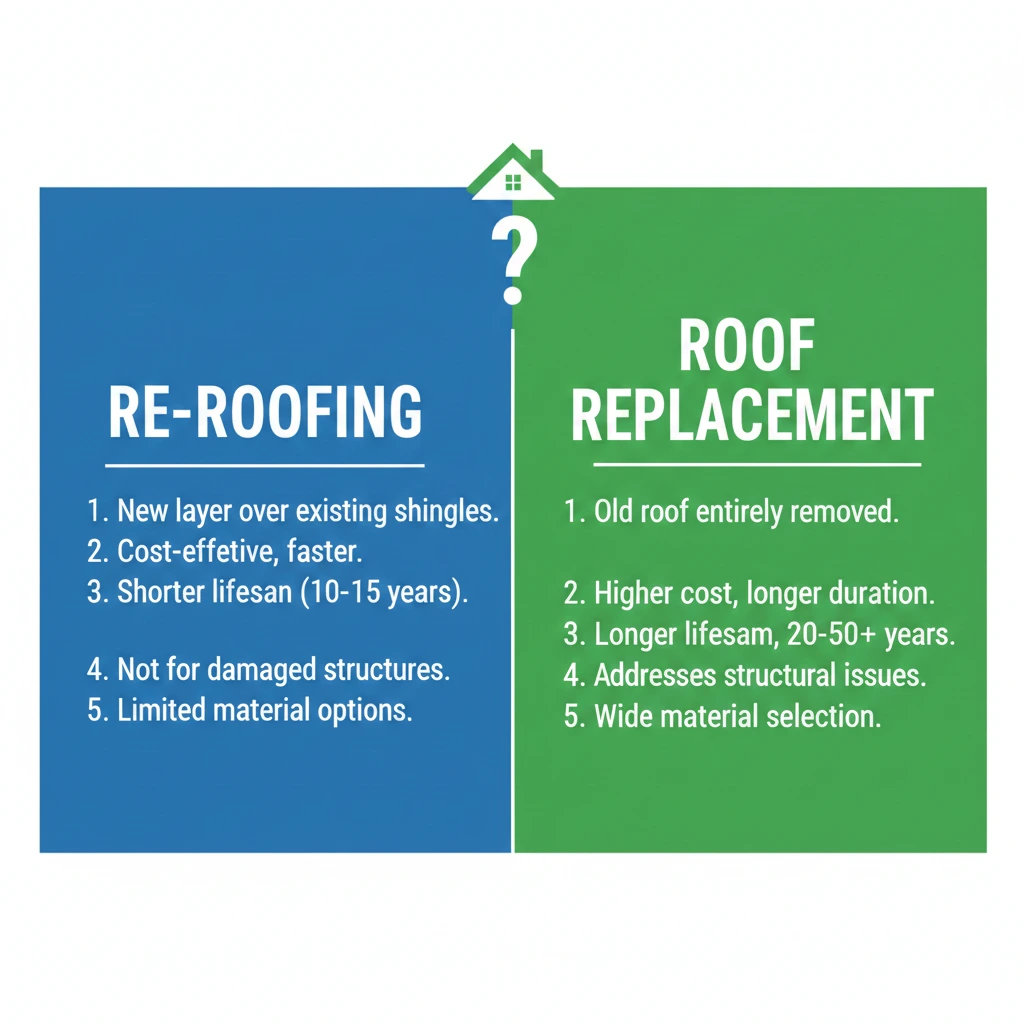
Roof repair focuses on fixing localized damage while preserving the existing roofing system.
Roof replacement involves removing the old roof and installing a new, fully integrated roofing system designed for long-term performance.
The key difference lies in scope, longevity, and risk exposure.
Roof Repair: Targeted Solutions for Isolated Problems
Roof repair addresses specific issues without disturbing the entire roof system. It is commonly used to extend the remaining service life of a roof that is otherwise structurally sound.
Common Roof Repair Services
- Sealing minor or early-stage leaks
- Replacing damaged or missing shingles
- Repairing flashing around chimneys, skylights, and vents
- Addressing small areas of wind or debris damage
Roof Repair Is Best For
- Newer roofs still within their expected lifespan
- Damage limited to one or two areas
- Roof decking, underlayment, and ventilation in good condition
Roof repair is a short- to mid-term solution. It helps preserve roof performance but does not reset the roof’s age or warranty.
Roof Replacement: A Complete Roofing System Reset
Roof replacement involves removing existing materials and installing a new system engineered to meet current performance and safety standards.
What a Full Roof Replacement Includes
- Complete removal of old roofing materials
- Inspection and repair of roof decking
- Installation of underlayment, flashing, and ventilation
- New roofing material installation
Roof Replacement Is Best For
- Aging roofs approaching end of life
- Widespread or recurring damage
- Homeowners planning long-term occupancy or resale
A full replacement restores structural integrity, weather resistance, and warranty eligibility.
Roof Repair vs Roof Replacement: Key Differences at a Glance
| Factor | Roof Repair | Roof Replacement |
| Scope | Localized areas | Entire roofing system |
| Lifespan impact | Limited extension | Full reset |
| Hidden damage risk | Higher | Lower |
| Warranty eligibility | Rare | Common |
| Long-term ROI | Limited | Strong |
When Roof Repair Is the Right Option
1. Minor and Isolated Damage
Roof repair may be sufficient when:
- Leaks are small and contained
- Only a few shingles or flashing sections are affected
- There are no signs of sagging, rot, or structural weakness
2. Newer Roofs With Limited Wear
Repair is often appropriate if:
- The roof is early in its expected lifespan
- Damage resulted from a single event, such as storm debris
- Underlayment and ventilation systems remain intact
3. Short-Term or Budget-Conscious Situations
Roof repair can be a practical choice when:
- The home will be sold soon
- A full replacement is planned later
Immediate weather protection is the priority
When Roof Replacement Is the Better Choice
1. Aging or End-of-Life Roofs
Most asphalt shingle roofs reach replacement age around 20–25 years, depending on climate and maintenance.
Replacement is recommended when:
- Shingles are curling, cracking, or losing granules
- Protective layers no longer perform effectively
- Repairs only provide temporary relief
2. Widespread or Structural Damage
Roof replacement is often necessary if:
- Roof decking feels soft or appears sagging
- Leaks occur in multiple locations
- Moisture has reached insulation or framing
Surface repairs cannot reliably correct moisture-saturated or structurally compromised systems.
3. Repeated Repairs With Rising Costs
When repairs are needed every few years, replacement typically delivers:
- Better long-term value
- Reduced risk of hidden damage
- Greater peace of mind
Professional Decision Checklist: Repair or Replace?
You likely need roof replacement if three or more apply:
- Roof is 20+ years old
- Multiple leak points exist
- Soft or sagging decking is present
- Shingles show cracking or granule loss
- Repairs were required within the last 3–5 years
This checklist mirrors how licensed roofing professionals evaluate roofs during inspections.
Understanding the Roof Replacement Process
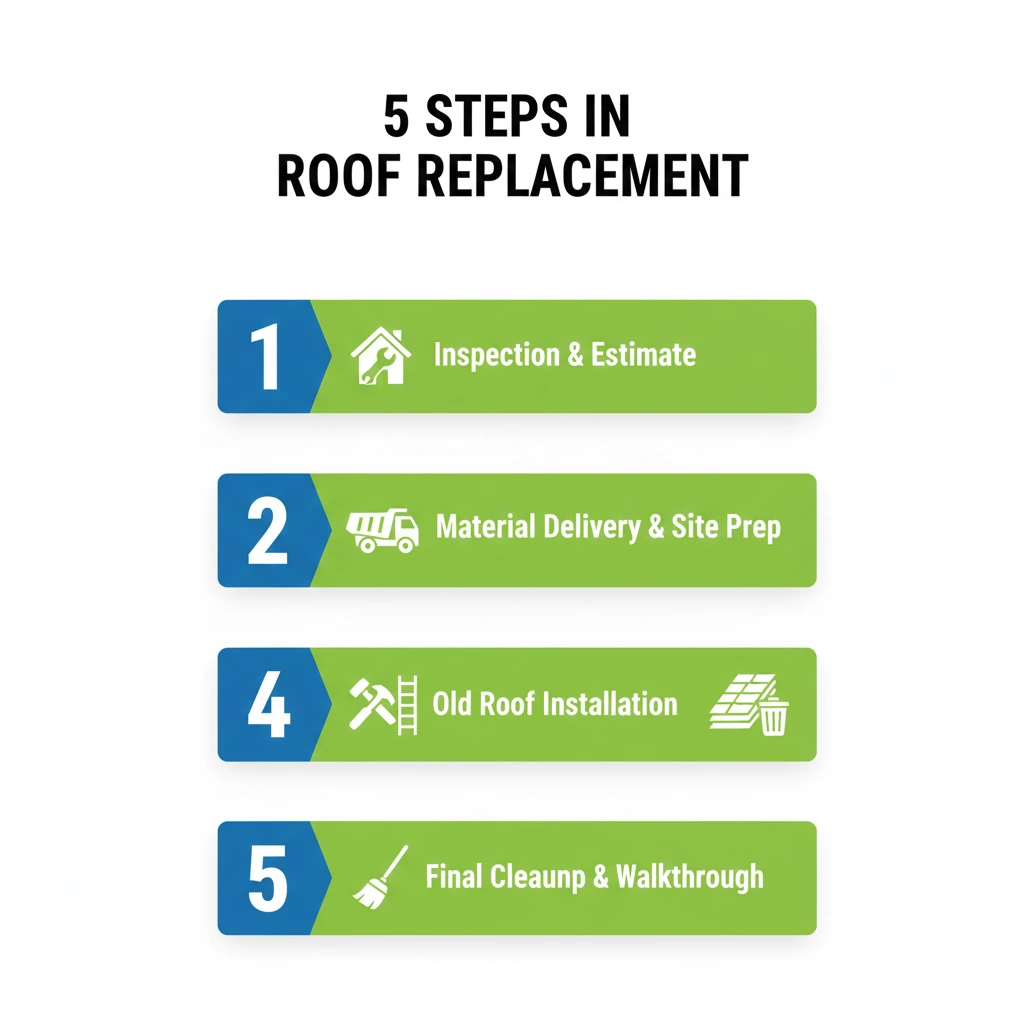
Step 1: Professional Roof Inspection
A qualified roofer evaluates:
- Structural integrity
- Roof measurements and layout
- Signs of hidden moisture damage
Step 2: Planning and Material Selection
Roofing materials are selected based on climate, slope, and structure:
- Asphalt shingles
- Metal roofing systems
- Flat or low-slope roofing solutions
- Energy-efficient roofing options
Step 3: Removing the Existing Roof
This phase includes:
- Controlled tear-off
- Deck inspection and required repairs
- Safe debris removal
Common mistake: Skipping deck repairs often leads to premature roof failure.
Step 4: New Roof Installation
Installation follows local code requirements established by the International Residential Code:
- Underlayment placement
- Flashing and ventilation installation
- Final roofing surface installation
Step 5: Final Inspection and Cleanup
Before completion:
- Quality checks are performed
- Warranty documentation is provided
- The worksite is fully cleaned
Roof Repair vs Roof Replacement: Cost Over Time
While roof repair costs less upfront, roof replacement often delivers better long-term value.
Cost Considerations
- Roof size and pitch
- Material selection
- Labor and permit requirements
- Hidden damage discovered after tear-off
Replacement reduces recurring repair expenses and typically qualifies for manufacturer and workmanship warranties.
Energy Efficiency and Home Value Benefits
A new roofing system can improve:
- Insulation performance
- Ventilation balance
- Indoor temperature stability
Modern roofing systems help reduce heat gain and loss, especially when energy-efficient materials are used.
A new roof also:
- Increases buyer confidence
- Improves resale appeal
- Enhances overall property value
Conclusion: Roof Repair vs Roof Replacement Making the Right Choice
When comparing roof repair vs roof replacement, the best decision depends on roof age, damage extent, and long-term goals.
Roof repair is effective for minor, isolated issues on structurally sound roofs. Roof replacement is the smarter choice when age, widespread damage, or repeated repairs increase long-term risk.
Next step:
Schedule a professional roof inspection before committing to repair or replacement.
Should you repair your roof or replace it?
Repair works for small issues on newer roofs. Replacement is better for older roofs or widespread damage.
How much damage requires roof replacement?
Damage affecting multiple areas or the roof deck usually indicates replacement.
Can a roof be repaired instead of replaced?
Yes, when damage is isolated and the structure remains sound.
How long does a roof replacement last?
Longevity depends on materials, installation quality, and climate exposure.
Does insurance cover roof repair or replacement?
Coverage depends on policy terms and the cause of damage, such as storms or accidental events.
