
Understanding Roof Replacement
Is your roof showing signs of age, leaks, or storm damage and you’re not sure what to do next?
If yes, you’re not alone.
Quick answer:
Roof replacement means removing the old roof and installing a full new roofing system. It becomes necessary when repairs no longer solve the problem or when the roof reaches the end of its life.
This guide is for:
- Homeowners
- Property managers
- Home buyers and real estate investors.
You’ll learn:
- When roof replacement is needed
- Why it protects your home long-term
- A clear breakdown of the roof replacement stages
To build trust and accuracy, this guide follows professional standards from the National Roofing Contractors Association (NRCA) and recognized building codes.
What Is Roof Replacement?
Roof replacement (also called new roof installation) is the process of removing existing roofing materials and installing a complete new roofing system.
What full roof replacement involves
- Removing old shingles or roofing layers
- Inspecting the roof deck (wood base)
- Repairing damaged sections if needed
- Installing underlayment, flashing, and ventilation
- Adding new surface roofing materials
Roof repair vs partial vs full replacement
| Option | What it covers | Best for |
| Roof repair | Fixes small damaged areas | Minor leaks or isolated issues |
| Partial replacement | Replaces one roof section | Localized damage |
| Full residential roof replacement | Replaces the entire roof | Old, worn, or failing roofs |
When Do You Need Roof Replacement?
Age and wear of the roof
Most roofs have a fixed lifespan:
- Asphalt shingles: 20 – 30 years
- Metal roofing: 40 – 70 years
- Flat roofing systems: 15 – 25 years
Climate, ventilation, and maintenance affect how long a roof lasts.
Visible signs of damage
Look for:
- Missing, cracked, or curling shingles
- Granule loss collecting in gutters
- Sagging or uneven roof lines
Water leaks and interior damage
Common warning signs inside the home:
- Ceiling stains
- Mold or moisture smells
- Wet or compressed insulation
Weather and storm impact
Severe weather often speeds up roof failure:
- High winds cause uplift
- Hail damages shingle surfaces
- Heat and cold cause material expansion and shrinkage
Why Roof Replacement Is Important
Protects the structure
A failing roof allows water to reach framing, walls, and ceilings.
Stops rising repair costs
Repeated patch repairs often cost more over time than one proper replacement.
Improves energy efficiency
According to the U.S. Department of Energy, roof insulation and ventilation affect heating and cooling costs.
ENERGY STAR-rated roofs can reduce heat gain by up to 15% (DOE, 2023).
Increases property value
A new roof improves resale value and buyer trust. Many buyers avoid homes with aging roofs.
How the Roof Replacement Process Works
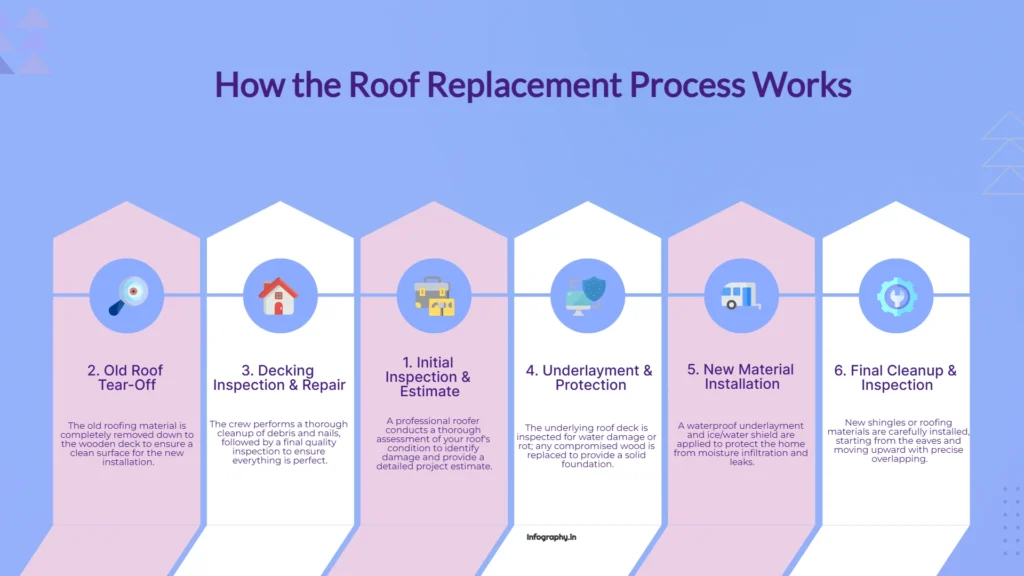
Step 1: Professional roof inspection
A licensed roofer checks:
- Shingles and flashing
- Roof deck condition
- Ventilation and drainage
Step 2: Material selection and planning
Common options include:
- Asphalt shingles
- Metal roofing
- Flat or low-slope systems
- Reflective and energy-efficient roofing
Step 3: Removing the old roof
- Old materials are torn off
- Landscaping and property are protected
- Deck repairs are completed if needed
Step 4: New roof installation
Installation follows the International Residential Code (IRC):
- Underlayment installation
- Flashing and ventilation setup
- Surface roofing material installed
Step 5: Final inspection and cleanup
- Work quality review
- Debris removal
- Warranty documents shared
Tip: Skipping deck inspection often leads to hidden leaks later.
How Long Does Roof Replacement Take?
Most residential roof replacement projects take:
- 1 – 3 days for standard homes
Factors that affect time:
- Roof size and slope
- Weather conditions
- Structural repairs found during tear-off
How Much Does Roof Replacement Cost?
Costs vary by location, but pricing depends on:
- Roof size and pitch
- Material choice
- Labor and permit fees
- Hidden damage discovered
Because pricing changes by region, exact figures are avoided here. A professional inspection gives accurate estimates.
Roof Replacement vs Roof Repair: Which Is Right?
Roof repair works when:
- Damage is small and isolated
- Roof is relatively new
Roof replacement works when:
- Roof is near end of life
- Leaks appear in multiple areas
- Warranties no longer apply
Full replacement often costs less over time by avoiding repeat repairs.
Roofing Options for Residential Roof Replacement
Popular choices:
- Asphalt shingles
- Metal roofing
- Flat or low-slope systems
- Reflective and cool roofing
How to Choose the Right Roof Replacement Services
Look for contractors who provide:
- Proper licensing and insurance
- Local project experience
- Manufacturer and workmanship warranties
- Code-compliant installation
The National Roofing Contractors Association recommends hiring certified professionals for safety and performance.
Conclusion: Making the Right Roof Replacement Decision
Roof replacement becomes necessary when repairs stop working or the roof reaches its age limit.
It protects the home, saves future repair costs, and improves comfort.
Understanding the roof replacement process helps homeowners plan with confidence. Next step:
Schedule a professional roof inspection and compare material options before damage grows.
How often should a roof be replaced?
Roof durability often ranges from around 20 to 30 years and varies with material choice and weather conditions.
Is roof replacement worth it?
Yes. It prevents water damage, improves energy use, and raises property value.
Can homeowners stay in the house during roof replacement?
Yes. Most families stay home, though noise is expected during work hours.
Does insurance cover roof replacement?
Insurance may cover storm-related damage. Coverage depends on policy terms.
Is there a preferred season for roof replacement projects?
Spring and fall offer stable weather, but licensed contractors work year-round.
