
Can you replace a roof in winter? Yes, a roof can be replaced in winter on Long Island on milder, dry days. The main limits are cold temperatures that affect shingle sealing, snow and ice on the roof, and shorter working days. A good roofer will not refuse winter work, but will plan it around the weather and the manufacturer’s cold-weather instructions.
If you have a leaking or aging roof and winter has arrived, this guide explains what is safe, what is risky and when it is smarter to wait.
Quick answer: You can replace a roof in winter when the weather allows it. Shingle manufacturers have special instructions for cold conditions, mainly hand-sealing, careful handling and working during the warmest, sunniest part of the day. Urgent leaks should be protected right away, and non-urgent replacements can often be booked for spring.
5 Key Facts About Replacing a Roof in Winter
- It is possible. Roofers install roofs in cold weather, but only on days when the roof is dry, safe to walk on and free of heavy snow and ice.
- 40°F is the common cold-weather line. Major shingle makers such as Owens Corning treat air and roof surface temperatures at or below 40°F as cold-weather conditions with extra steps.
- Sealant strips need warmth. Shingles bond with a heat-activated sealant, so in winter they may not seal right away and may take longer to lie flat.
- Hand-sealing helps. Manufacturers and industry groups recommend sealing shingles by hand with approved roofing cement in cold weather to protect against wind lift.
- Urgent problems should not wait. Active leaks, storm damage and a failing roof need protection now, even if the full replacement is scheduled for spring.
Can You Replace a Roof in Winter?
Yes, with conditions. The question is not just the date on the calendar. It is the weather on the day of the work.
A roof replacement usually goes ahead when:
- The roof surface is dry and free of ice
- Snow can be safely cleared from the work area
- Temperatures are cold but workable, and the day is sunny enough to help the shingles settle
- No major storm is forecast during the time the roof deck is open
A roofer will usually wait when the roof is icy, buried in snow, wet or hit by high winds. Safety comes first, and rushing a cold-weather job can cause leaks and blow-offs later.
How Cold Weather Affects Shingles
Asphalt shingles react to temperature in three ways.
They become stiffer. In cold weather, shingles are less flexible. Bending, throwing or dropping bundles can crack them, so crews handle them more carefully.
The sealant strip may not activate. Each shingle has a factory strip of sealant that bonds it to the shingle below once sunlight and warmth activate it. In winter, this bond can be delayed. Some manufacturers note that shingles installed in cold weather may not seal immediately and can take longer to lie flat. Darker shingles tend to seal faster than lighter ones, and steep slopes can be slower to seal.
Foot traffic can break the bond. Walking on cold, hardened shingles can crack them or break the sealant bond, so crews limit traffic and work carefully.
To manage these risks, manufacturers recommend steps such as hand-sealing shingles with approved asphalt roofing cement, handling bundles carefully, and following the installation instructions for your specific shingle. See the Asphalt Roofing Manufacturers Association cold-weather guidance and GAF’s cool-weather installation tips for more detail.
Pros of Replacing a Roof in Winter
- Urgent problems get fixed before they get worse. A leaking roof can soak insulation, damage decking and lead to mold. Acting early limits interior damage.
- Possible scheduling flexibility. Some contractors have a lighter schedule in the colder months, so you may get an earlier start than in the busy spring and summer seasons.
- Less disruption from heat. Crews and homeowners are not dealing with extreme summer heat.
- Ready before the next storm. A new roof in place before late-winter storms can reduce the risk of storm damage.
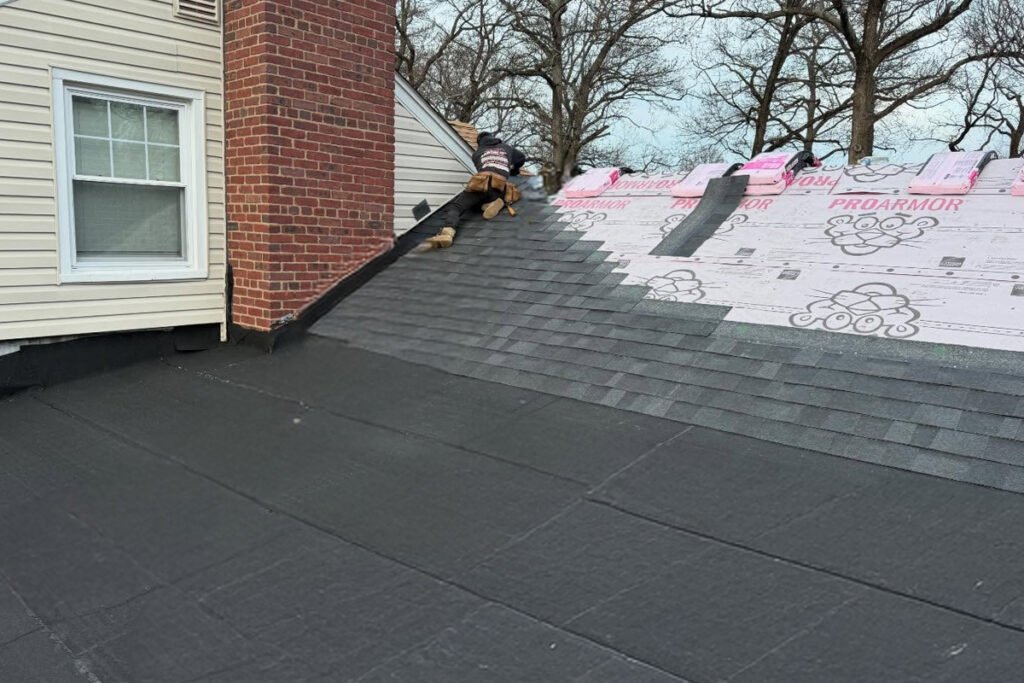
Cons and Risks of Replacing a Roof in Winter
- Weather delays. Snow, ice, rain and wind can postpone the job, and a delayed job can stretch over several days.
- Safety. Icy or frosty roofs are dangerous, so crews must clear and secure the work area.
- Shorter days. Less daylight means fewer hours to work, and the warmest part of the day is the best time to install shingles.
- Slower work. Hand-sealing and extra care take more time than a standard installation.
- Delayed sealing. Shingles may not fully bond until warmer, sunny weather arrives, which is why correct installation matters.
- Open roof risk. If a storm arrives while the deck is exposed, the roof must be protected quickly. A prepared roofer will plan work in sections and dry in the roof each day.
Winter Roof Work That Makes Sense Right Now
Even if you decide to wait for spring, you do not have to wait to protect your home:
- Emergency repair. Active leaks, missing shingles and storm damage should be repaired promptly. See our guide on roof repair cost on Long Island.
- Temporary protection. A tarp or temporary patch can hold a damaged roof through a bad stretch of weather.
- Ice and water shield. If your roof is being repaired or replaced, ask about this waterproof membrane along the eaves and valleys, which helps in winter. Learn more in our guide to ice dams on Long Island roofs.
- Attic check. Look for wet insulation, stains or poor ventilation. Our guide to roof ventilation on Long Island explains the warning signs.
- A roof inspection and written estimate. Winter is a good time to get your roof assessed and plan a spring project, with materials chosen and the price agreed before the busy season.
- Insurance documentation. If a storm caused damage, take photos and start your claim early.
When to Replace Now and When to Wait
Replace now (or protect the roof immediately) if:
- Water is entering your home
- The roof has storm damage, missing sections or exposed decking
- The deck is sagging or soft
- Repairs are no longer holding
It is usually fine to wait for spring if:
- The roof is aging but not leaking
- You are still comparing contractors and materials
- Snow, ice or constant low temperatures make safe work unlikely
- You want the best conditions for the shingles to seal
If you are not sure, a roof inspection will tell you whether the roof can safely wait. Read our roof inspection checklist to know what to look for.
What a Winter Roof Replacement Involves
A careful winter replacement usually includes:
- Weather planning. The crew checks the forecast and picks dry days with workable temperatures.
- Clearing the roof. Snow and ice are removed from the work area before tear-off.
- Tear-off in sections. Only the area that can be finished and dried in that day is opened.
- Deck inspection. Damaged or wet decking is replaced. See our guide on roof deck damage on Long Island.
- Underlayment and protection. The roof is covered with the correct underlayment so it is protected overnight.
- Shingle installation. Shingles are handled carefully and installed following the manufacturer’s cold-weather instructions, with hand-sealing where needed.
- Cleanup and inspection. The crew checks the finished work and cleans the property.
Permit rules and building codes apply all year. Check our guides on roof permits on Long Island and roof replacement building codes on Long Island.
Frequently Asked Questions
Can you replace a roof in winter on Long Island?
Is it okay to install shingles below 40°F?
Will a winter installation void my shingle warranty?
Will the shingles still seal in winter?
What if a storm hits during my roof replacement?
What about metal or flat roofs in winter?
Should I wait until spring?
Not Sure Whether to Replace Now or Wait? Call Skyscape Roofing
At Skyscape Roofing, we inspect your roof and give you a clear recommendation on what needs attention now and what can safely wait. We serve homeowners across Nassau and Suffolk County.
Request your roof inspection and estimate today.
📞 516-727-6265 ✉️ info@skyscaperoofing.com 📍 28 Brussel Dr, New Hyde Park, NY 11040
