
Flat roofs are commonly found on commercial buildings, warehouses, apartment properties, retail spaces, and residential extensions across Long Island, NY. While they offer practical design advantages, flat roofing systems require proper drainage, suitable materials, and regular maintenance to protect buildings from water intrusion and weather-related damage.
Property owners in Nassau County and Suffolk County may experience roofing concerns related to seasonal rainfall, snow, strong winds, temperature changes, and coastal exposure. Even a small drainage issue or damaged roofing membrane can eventually lead to more extensive problems if left unaddressed.
So, what are the most common flat roof problems, how can you identify them, and when should you contact a professional roofing contractor?
In this guide, Skyscape Roofing explains the common causes of flat roof damage, practical maintenance considerations, and when repair or replacement may be necessary.
What Are the Most Common Flat Roof Problems?
The most common flat roof problems include standing water, roof leaks, damaged membranes, flashing failures, blocked drainage systems, and weather-related deterioration.
These issues can affect both residential and commercial properties. Identifying early warning signs can help property owners address roofing concerns before they become more extensive.
Here are seven common flat roofing problems to understand.
1. Standing Water and Roof Ponding
Standing water, also known as ponding water, occurs when rainwater remains on a flat roof instead of draining away properly.
Although flat roofs are designed with a slight slope, drainage problems can cause water to collect in certain areas.
Common causes include:
Blocked roof drains.
Inadequate drainage design.
Roof settlement or structural movement.
Insufficient roof slope.
Deteriorated drainage components.
Why does it matter?
Persistent ponding can place additional demands on the roofing system and may contribute to membrane deterioration, leaks, and moisture-related damage.
What should property owners do?
Check drainage areas for visible debris and arrange a professional assessment if water continues to collect after rainfall. Avoid attempting to remove large amounts of standing water without understanding the roof’s condition.
2. Flat Roof Leaks and Water Intrusion
Roof leaks are among the most concerning flat roofing problems because water can enter the building and affect ceilings, walls, insulation, and interior finishes.
A flat roof leak may originate from damaged membranes, loose seams, flashing problems, or drainage-related issues.
Common warning signs include:
Water stains on ceilings.
Damp patches on interior walls.
Dripping water after rainfall.
Peeling paint.
Musty odors.
Visible moisture near roof penetrations.
A leak’s visible location inside the building does not always identify the actual entry point on the roof. Water can travel through roofing layers before becoming noticeable indoors.
A professional inspection can help identify the source of water intrusion and determine the appropriate repair.
3. Roof Membrane Cracks and Damage
The roofing membrane acts as a protective barrier against moisture.
Over time, exposure to sunlight, temperature changes, foot traffic, and weather can affect the condition of roofing materials.
Common membrane problems include:
Surface cracks.
Punctures and tears.
Loose membrane sections.
Open or deteriorated seams.
Separation around roof edges.
The type of damage and the roofing material determine the appropriate repair method.
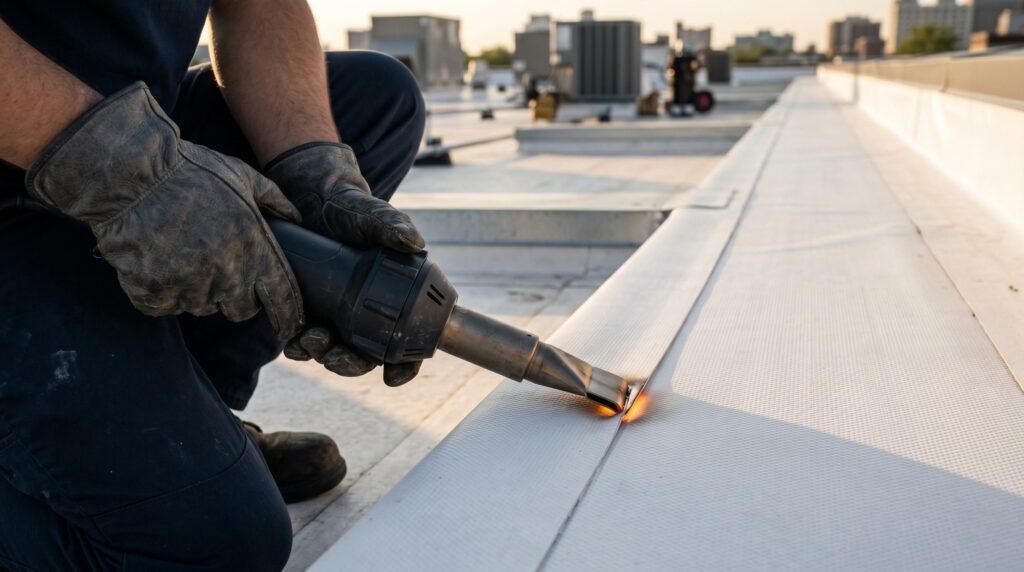
TPO, EPDM, PVC, and modified bitumen systems each have different installation and maintenance requirements.
4. Damaged Flashing Around Roof Edges and Penetrations
Flashing is an important part of a flat roofing system. It helps protect vulnerable areas where the roof meets walls, vents, drains, and other structural components.
Damaged or improperly installed flashing can create pathways for water intrusion.
Areas that may require attention include:
Roof edges and parapet walls.
Vent pipes.
HVAC equipment openings.
Roof drains.
Wall-to-roof connections.
Property owners should pay attention to recurring leaks around these areas. Professional assessment can help determine whether flashing repair or replacement is necessary.
5. Blocked Roof Drains and Poor Drainage
Proper drainage is essential for flat roof performance.
Leaves, dirt, debris, and other materials can accumulate around roof drains and interfere with water flow.
This can become particularly concerning during periods of heavy rainfall.
Practical drainage maintenance tips:
Check visible roof drains for debris.
Look for areas where rainwater collects.
Inspect drainage outlets for visible obstructions.
Arrange professional checks of drainage components.
Address recurring ponding rather than treating it as a normal condition.
Do not remove protective drain components or enter unsafe roof areas without appropriate precautions.
6. Weather-Related Flat Roof Damage in Long Island
Long Island properties experience changing weather conditions throughout the year. Rainfall, snow, strong winds, sunlight, and coastal exposure can affect roofing systems over time.
Different conditions may create different roofing concerns.
Heavy rainfall: Inadequate drainage can contribute to standing water and potential leaks.
Snow and winter conditions: Snow accumulation and ice-related drainage issues can place additional demands on low-slope roofing systems.
Strong winds: Wind can affect roof edges, flashing, and exposed roofing components.
Coastal exposure: Properties near coastal environments may experience additional exposure to salt air, which can affect certain roofing components and metal details.
For property owners in Nassau County and Suffolk County, choosing appropriate materials and maintaining effective drainage are important considerations when managing flat roofs.
7. Insulation and Moisture Problems
Flat roofing systems often include insulation beneath the waterproofing membrane.
If moisture enters the roofing assembly, insulation performance may be affected. Depending on the extent of moisture exposure, this can contribute to additional roofing concerns.
Potential warning signs include:
Interior moisture.
Persistent leaks.
Damp insulation identified during an inspection.
Changes in interior ceiling conditions.
If moisture is suspected within the roofing assembly, a professional assessment can help determine the extent of the issue and the appropriate next steps.
What Causes Flat Roof Problems in Long Island?
Flat roof problems usually develop due to a combination of installation conditions, material deterioration, drainage issues, and environmental exposure.
The following table summarizes some common causes and their potential effects.
| Roofing concern | Common cause | Potential impact |
|---|---|---|
| Standing water | Blocked drains or inadequate slope | Ponding and deterioration |
| Roof leaks | Membrane or flashing damage | Interior water intrusion |
| Membrane cracks | Weather exposure and aging | Reduced waterproofing protection |
| Flashing failure | Deterioration or improper installation | Water entry around roof details |
| Drainage problems | Debris and blocked outlets | Water accumulation |
| Insulation moisture | Water entering the roofing assembly | Reduced insulation performance |
Understanding these causes can help property owners make better decisions about roof maintenance and professional inspections.
How to Maintain a Flat Roof in Long Island
Regular maintenance is an important part of protecting a flat roofing system.
While maintenance requirements depend on the roofing material, building design, and roof age, the following practices can help property owners identify potential problems.
1. Inspect the Roof After Significant Storms
Strong winds and heavy rainfall can expose existing weaknesses in roofing systems.
Consider arranging an inspection after significant weather events, particularly if you notice leaks or visible roof damage.
2. Keep Drainage Systems Clear
Roof drains and drainage outlets should be checked regularly for visible debris and obstructions.
Proper drainage helps prevent unnecessary water accumulation.
3. Monitor the Roofing Membrane
Look for visible signs of cracking, punctures, loose seams, and deteriorating materials.
Any suspected membrane damage should be evaluated by a qualified roofing professional.
4. Check Flashing and Roof Penetrations
Roof edges, vents, drains, and other penetrations should receive attention during professional inspections.
These areas are important parts of the overall waterproofing system.
5. Address Minor Problems Early
Do not ignore recurring leaks, ceiling stains, or standing water.
Early assessment may help identify localized problems before they develop into more extensive roofing issues.
Which Flat Roofing Material Is Suitable for Long Island Properties?
Choosing a roofing material requires considering the building structure, roof design, installation requirements, and expected maintenance.
Some commonly used flat roofing systems include:
TPO Roofing
Thermoplastic Polyolefin (TPO) is a single-ply membrane used on many commercial low-slope roofs.
Its reflective surface options and heat-welded seams make it an option worth evaluating for certain commercial properties.
EPDM Roofing
Ethylene Propylene Diene Monomer (EPDM) is a synthetic rubber roofing membrane valued for its flexibility and weather resistance.
It is used in various low-slope roofing applications.
PVC Roofing
Polyvinyl Chloride (PVC) is a single-ply membrane with heat-welded seams and resistance to certain chemicals.
It may be considered for commercial buildings where these characteristics are relevant.
Modified Bitumen Roofing
Modified bitumen is an asphalt-based roofing system designed for low-slope applications.
It is available in different installation formats and can be suitable for various building requirements.
There is no single material that is best for every Long Island property. A roofing assessment can help determine which options are appropriate.
Flat Roof Repair vs. Replacement: How Do You Know?
Not every flat roof problem requires a complete replacement. In some situations, localized repairs may be sufficient. In others, extensive deterioration may make replacement a more practical option.
Flat roof repair may be appropriate when:
Damage is limited to a specific section.
The remaining membrane is in suitable condition.
The roof deck is not extensively damaged.
The source of water intrusion can be identified.
The existing roofing system has sufficient remaining service life.
Flat roof replacement may be worth considering when:
Large areas of the membrane have deteriorated.
Leaks continue despite previous repairs.
Extensive moisture damage is identified.
The roofing system has reached the end of its useful service life.
Repeated repairs are no longer addressing the underlying problems.
A professional inspection can help determine whether repair or replacement is the more appropriate solution.
When Should You Contact a Flat Roofing Contractor?
You should consider contacting a professional roofing contractor when you notice persistent leaks, standing water, visible membrane damage, recurring drainage issues, or deterioration around roof edges.
Delaying an assessment may allow moisture-related problems to become more extensive.
Property owners looking for professional assistance can explore Skyscape Roofing’s Flat Roofing Services in Long Island to learn more about flat roof installation, repair, and replacement options.
Skyscape Roofing provides residential and commercial roofing solutions across Long Island, NY.
Why Long Island Property Owners Should Prioritize Flat Roof Maintenance
Flat roof maintenance is not simply about fixing leaks after they appear. It involves understanding the roofing system, maintaining proper drainage, identifying visible deterioration, and addressing potential problems before they become more extensive.
For property owners in Nassau County, Suffolk County, and surrounding Long Island communities, regular attention to roof condition can support better long-term building maintenance decisions.
Working with an experienced roofing professional can also help property owners understand available materials, repair options, and replacement considerations.
Frequently Asked Questions About Flat Roof Problems
What is the most common problem with flat roofs?
Why does water collect on my flat roof after rain?
How do I know if my flat roof is leaking?
How often should a flat roof be inspected?
Can standing water damage a flat roof?
Which flat roofing material is best for commercial buildings?
Should I repair or replace my flat roof?
Does Skyscape Roofing provide flat roofing services in Long Island?
Final Thoughts: Protect Your Flat Roof with the Right Maintenance
Flat roof problems can develop from drainage issues, damaged membranes, deteriorating flashing, moisture intrusion, and changing weather conditions.
Understanding these warning signs can help Long Island property owners make informed decisions about maintenance, repair, and replacement.
Whether you manage a commercial building or own a residential property with a low-slope roof, paying attention to roofing conditions is an important part of protecting your investment.
Skyscape Roofing helps residential and commercial property owners across Long Island discuss their roofing requirements and explore suitable roofing solutions.
Need professional help with your flat roof?
Contact Skyscape Roofing to discuss your roofing concerns and request an estimate.
Skyscape Roofing Incorporated
28 Brussel Dr, New Hyde Park, NY 11040, USA
Phone: 516-727-6265
Website: https://skyscaperoofing.com/
Explore our Flat Roofing Services in Long Island to learn more.
