
Living near the coast comes with beautiful views, fresh air, and easy access to the water. But your coastal home also endures severe environmental conditions that wear down a roofing system fast.
Salt air, strong winds, heavy rain, humidity, snow, and seasonal storms gradually compromise roofing materials and structural decking underneath. For Long Island homeowners, choosing the best roof for coastal homes requires looking far beyond color, shingle profile, or curb appeal.
Quick Summary The best roof for coastal homes on Long Island balances high wind ratings with superior corrosion resistance. While architectural asphalt shingles (rated Class H for winds up to 150 mph) offer the most practical, cost-effective defense, standing seam metal roofing provides maximum longevity against coastal nor’easters when fitted with marine-grade fasteners.
Why Coastal Homes Need Special Roofing Considerations
A coastal roof faces far harsher elements than inland properties:
Airborne Salt Fog: Accelerates corrosion across exposed flashing, fasteners, valley metal, and gutter connections.
Sustained Gale Winds: Tropical storms and nor’easters get underneath shingle tabs, breaking adhesive seals and tearing fasteners.
Wind-Driven Rain: Forces moisture laterally beneath compromised underlayment and into roof penetrations.
Selecting the best roof for coastal homes requires evaluating structural load capacity, microclimate exposure, material resilience, and installation methods tailored to Nassau and Suffolk County conditions.
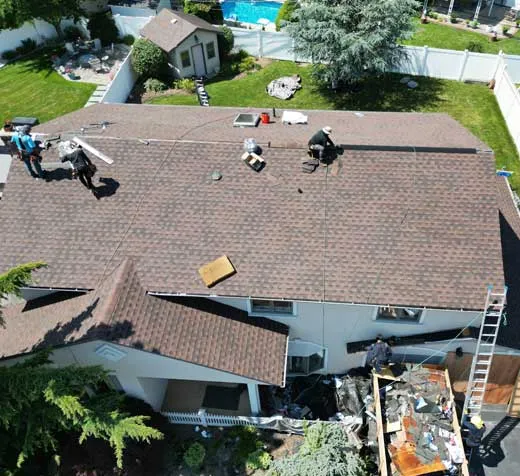
Evaluating the Best Roof for Coastal Homes on Long Island
No single product fits every architectural layout. Long Island properties typically balance three primary roofing systems:
1. Architectural Asphalt Shingles Architectural (laminated) asphalt shingles remain the dominant residential choice across Long Island due to affordability and modular repairability.
However, basic shingles fail quickly in marine environments. Coastal installations require high-wind certified shingles (ASTM D3161 Class F or ASTM D7158 Class H, rated up to 130–150 mph).
According to the FEMA Home Builder’s Guide to Coastal Construction, asphalt shingles deployed in coastal regions require enhanced fastener counts (6 nails per shingle instead of 4), sealed starter strips, and secondary waterproof barriers to resist wind uplift.
2. Standing Seam Metal Roofing Metal systems deliver unmatched wind resistance and longevity (lasting 40 to 70 years). Interlocking panels eliminate exposed edges where wind can catch.
Corrosion Factor: Standard galvanized steel degrades rapidly in marine environments. Coastal metal roofs must use marine-grade aluminum or zinc alloy panels paired with corrosion-resistant 300-series stainless steel fasteners to prevent galvanic reaction.
3. Concrete and Clay Tile Roofing Tile resists rot, insects, and salt spray without degrading. However, tile systems add immense dead weight to a structure, often requiring reinforced roof framing before installation. Each tile must be mechanically fastened to withstand coastal updrafts.
Critical Components Beyond the Surface Layer Surface shingles or metal panels represent only the exterior shield. True coastal storm resilience depends on the internal system components:
Underlayment Protection: Standard organic felt fails when exposed to wind-driven rain. High-performance coastal roofs require synthetic, self-adhering modified bitumen underlayment across critical transition areas.
Roof Flashing and Drip Edges: Water infiltration almost always occurs at penetrations—such as chimneys, skylights, dormers, and valleys. Coastal installations require non-corrosive stainless steel, heavy-gauge aluminum, or copper flashing. Protecting perimeter eaves also prevents deck rot.
Corrosion-Resistant Fasteners: Even premium shingles lift off if standard electro-galvanized nails corrode below the surface. FEMA guidelines specify hot-dipped galvanized or stainless steel fasteners designed to endure damp, salt-laden microclimates.
Attic Ventilation Balance: High coastal humidity creates significant attic condensation. Balanced ridge-and-soffit ventilation systems ensure heat and damp air escape without allowing wind-driven rain to infiltrate through intake baffles.
How Salt Air Impacts Roof Longevity
Salt aerosol travels several miles inland during major storms. Over time, salt deposits break down metal joints, oxidize copper valleys, and weaken asphalt shingle granular adhesion. Left unaddressed, moisture leaks down to structural sheathing, leading to hidden deck rot before leaks become visible indoors.
Roofing System Comparison
| Roofing Material | Wind Rating | Salt Resistance | Expected Lifespan | Cost Tier |
| Architectural Shingles | 110–130 mph | High (Non-metallic) | 20–30 Years | Budget / Moderate |
| Aluminum / Copper Metal | 140–160+ mph | Maximum | 40–60+ Years | Premium |
| Clay / Concrete Tile | 125–150 mph | Maximum | 50+ Years |
Protecting and Maintaining Coastal Roof Systems
Schedule twice-yearly professional inspections, especially following Atlantic hurricane season.
Inspect perimeter flashings, pipe boots, and chimney caps for early signs of metal oxidation.
Clear debris from valleys and gutters to stop standing saltwater and organic rot.
Trim overhanging tree limbs to prevent surface abrasion during high-wind events.
Repair vs. Replacement: Making the Call
Isolated wind lift or damaged flashing can often be resolved with prompt local roof repair to secure your perimeter.
However, if your shingles have lost surface granules, extensive decking has softened, or the system is approaching 25 years in an open coastal zone, an engineered roof replacement is necessary to install a modern, wind-rated protective package.
Need an expert evaluation of your coastal roof? Contact Skyscape Roofing today for a detailed storm-resilience inspection and custom estimate tailored to Long Island coastal standards.
