
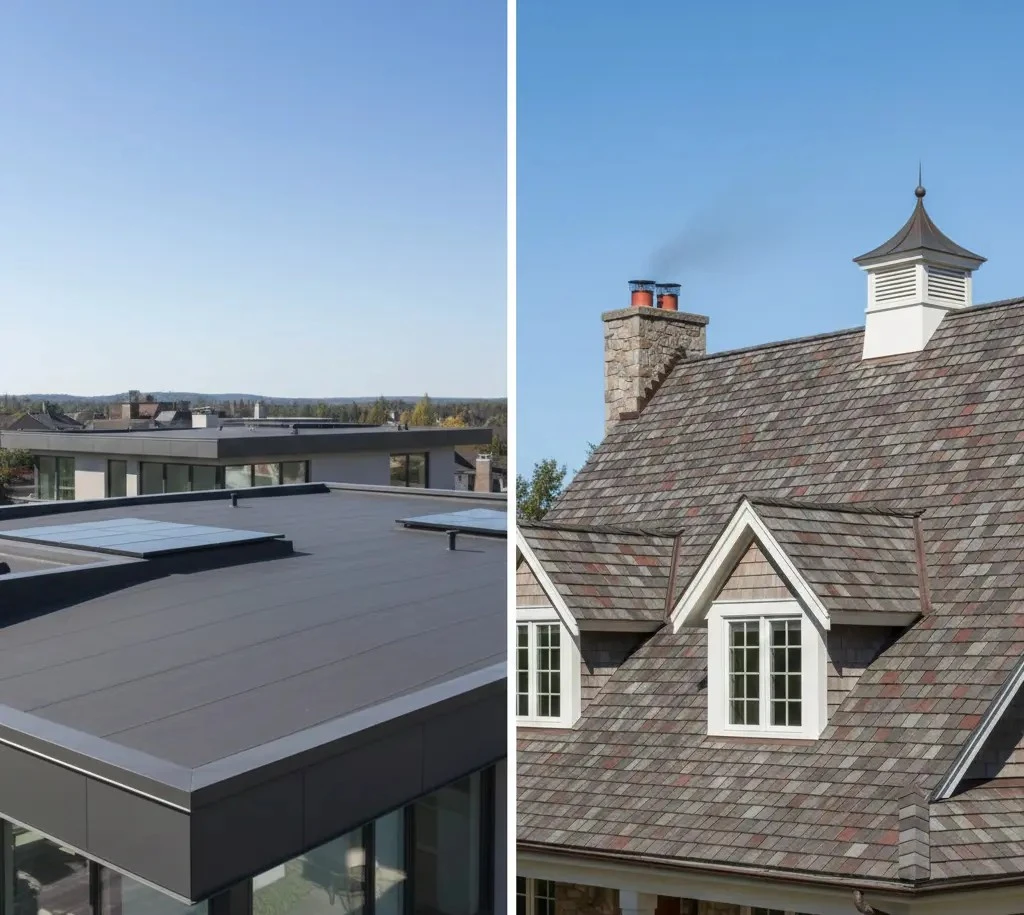
Flat roof vs shingle roof is a question many Long Island homeowners ask – usually right after a leak, a storm, or an uncomfortable estimate.
Flat roof or shingle roof?
It sounds like a simple choice, but it almost never is.
Short answer:
Flat roofs usually cost less upfront and make sense for modern or low-slope homes. Shingle roofs tend to feel more familiar, shed snow better, and often hold value longer. The “right” option depends on how your house is built, how water moves off the roof, and how much weather your home really takes on.
This isn’t a theory. It’s based on what residential roofers see every day across Nassau County and Suffolk County – after winters, nor’easters, and humid summers do their damage.
Why Roofing Choices Matter More on Long Island
Long Island is tough on roofs. Harder than many homeowners expect.
Between the snow that melts and refreezes, the wind that finds weak spots, and the salt air that quietly wears materials down, roofs here age differently than they do inland.
Over time, that shows up as:
- Shorter roof lifespan
- More frequent repairs
- Higher long-term costs
Most homes here fall into one of two camps:
- Flat or low-slope roofs
- Traditional pitched roofs with asphalt shingles
Local companies like a trusted roofing company in Long Island work on both constantly. The difference between a “good roof” and a problem roof usually isn’t the material – it’s whether the roof actually fits the house.
Flat Roofs: What Homeowners Should Really Know
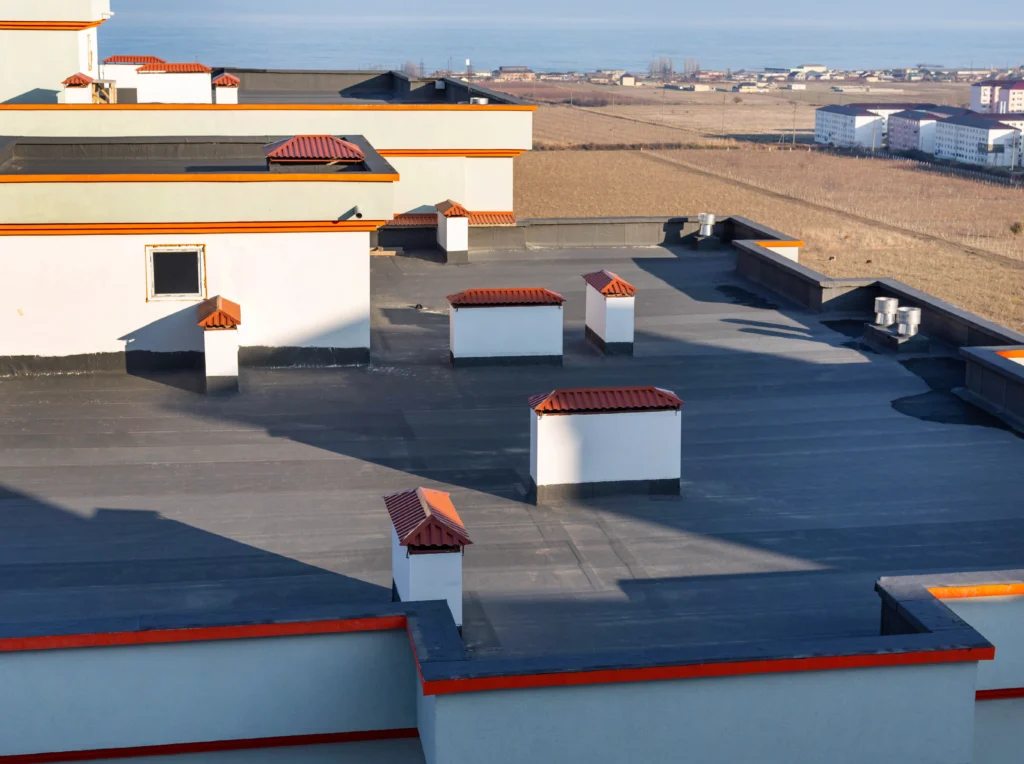
Despite the name, flat roofs aren’t flat. They’re slightly pitched so water can move toward drains instead of pooling.
You’ll see them most often on:
- Modern or mid-century homes
- Attached houses
- Additions and extensions
Typical flat roof materials include:
- EPDM (rubber roofing)
- TPO
- Modified bitumen
Drainage is where flat roofs either succeed or fail. A good system includes internal drains, scuppers, and often tapered insulation to guide water where it needs to go. This is why routine checks – like following a proper Roof Inspection Checklist matter more for flat roofs than many homeowners realize.
When drainage is done right, flat roofs handle Long Island weather surprisingly well. When it’s done poorly, problems show up fast.
Shingle Roofs: Familiar for a Reason
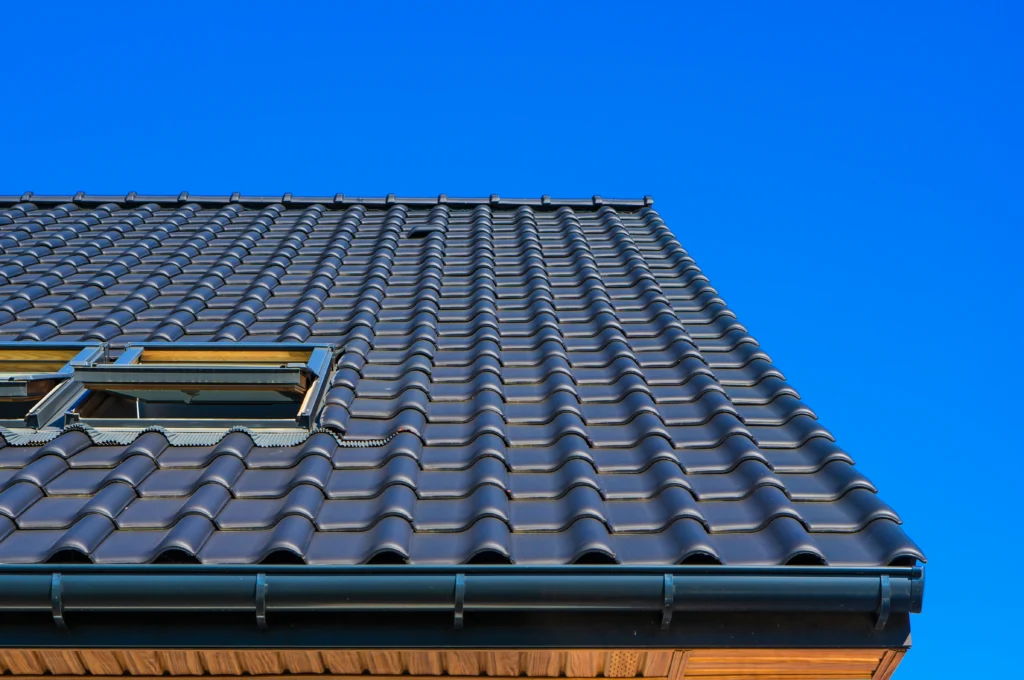
Shingle roofs are what most people picture when they think “roof.”
They’re pitched, visible, and rely on gravity to do the heavy lifting – moving rain, snow, and debris off the surface.
On Long Island, most shingle roofs:
- Use asphalt shingles
- Sit between a 4:12 and 9:12 pitch
- Include underlayment and ice protection
Good installations also factor in attic ventilation, which helps control moisture and heat buildup over time.
For many homeowners, shingle roofs feel safer simply because they’re familiar. And in snow-heavy winters, that comfort isn’t misplaced.
Cost: Flat Roof vs Shingle Roof on Long Island
Cost is usually the next question, so here’s how the numbers typically shake out.
| Cost Factor | Flat Roof | Shingle Roof |
| Upfront cost | Lower | Higher |
| Installation time | Faster | Slower |
| Material waste | Minimal | Higher |
| Repair impact | Localized | Can spread |
Flat roofs usually cost less because they:
- Use fewer materials
- Take less time to install
- Create less tear-off waste
Shingle roofs cost more mainly due to:
- Steep slopes
- Extra labor
- Required ice and water shielding
Exact pricing depends on the house. Access, roof size, drainage, and existing damage all matter. That’s also why homeowners often weigh roof repair vs roof replacement before committing to a full project.
Living With an Asphalt Shingle Roof
Homeowners tend to like shingles because:
- They look traditional
- They boost curb appeal
- Buyers recognize them
But they’re not perfect.
Near the coast, wind uplift can be an issue. In winter, ice dams can form during freeze – thaw cycles. And replacing shingles creates more waste than most people expect. The upside? When installed correctly with high wind-rated architectural shingles, they’re dependable and long-lasting – and when the time does come, a full roof replacement can significantly improve both protection and resale appeal.
Flat Roofing Isn’t Just for Commercial Buildings
Plenty of Long Island homeowners live under flat roofs every day – without issues.
EPDM is especially common because it:
- Handles temperature swings well
- Resists UV and ozone damage
- Provides consistent waterproofing
Flat roofs also make inspections easier. You can actually walk them, which helps catch small issues before they become expensive ones.
EPDM vs Shingles: A Real-World Comparison
- Water: EPDM tolerates standing water better
- Snow: Shingles shed snow more naturally
- Repairs: EPDM repairs usually stay localized
- Heat: Light-colored EPDM reflects sunlight
Neither is “better” across the board. Each solves a different problem.
How Long Roofs Actually Last Here
Under Long Island conditions:
- EPDM flat roofs last about 20 – 30 years
- Most asphalt shingle roofs on Long Island tend to hold up for roughly two decades, sometimes longer with good care.
Salt air, snow buildup, and drainage matter more than the material itself. Regular inspections extend lifespan more than most homeowners realize.
Climate Is the Deciding Factor
Long Island roofs deal with freeze – thaw expansion, wind-driven rain, and constant moisture – conditions commonly addressed in building science guidance from the Federal Emergency Management Agency, especially for coastal and high-wind regions.
- Freeze–thaw expansion
- Wind-driven rain
- Constant moisture
That’s why experienced roofers don’t recommend systems based on trends. They look at structure, exposure, and drainage first – whether for flat systems or broader residential and commercial roofing services.
So… Which Roof Makes Sense for Your Home?
A flat roof often works best if:
- Your home is modern or low-slope
- Budget matters upfront
- Easy access is a plus
A shingle roof usually makes sense if:
- Your home is traditional
- Resale value is important
- You want lower day-to-day involvement
The honest answer: the best roof is the one that works with your house, not against it
Final Thoughts
A roof isn’t just another home upgrade. It’s protection, comfort, and peace of mind.
Flat roofs and shingle roofs can both perform extremely well on Long Island – when they’re chosen for the right reasons and installed correctly.
If you’re weighing your options, a local inspection is the smartest place to start. It replaces guesswork with real answers.
How does Long Island’s coastal climate affect flat roofs compared to shingle roofs?
Coastal winds, salt air, and humidity put stress on both systems, but in different ways. Flat roofs depend heavily on proper drainage design, while shingle roofs rely on wind-rated materials and secure installation to prevent uplift near the shoreline.
Is a flat roof a bad idea for homes near the water?
Not necessarily. Flat roofs can perform very well near the coast when built with durable membranes like EPDM and a properly engineered drainage system. Problems usually come from poor slope design, not proximity to water.
Which roofing option requires more maintenance on Long Island?
Flat roofs generally need more routine visual checks to ensure drains stay clear, especially after storms. Shingle roofs require less frequent monitoring, but when issues occur, repairs can be more involved and spread further.
How do flat roofs and shingle roofs handle Long Island winters differently?
Shingle roofs naturally shed snow, reducing long-term weight buildup. Flat roofs can hold snow longer, which is why structural support and drainage planning are critical for winter performance.
Does roof type affect home insurance on Long Island?
In some cases, yes. Insurers may consider roof age, material, and wind ratings, especially in coastal zones. A newer flat or shingle roof installed to current codes can help avoid higher premiums.
Are flat roofs more prone to mold or moisture issues?
Flat roofs can be more vulnerable if ventilation and drainage aren’t addressed properly. With correct installation and routine inspections, moisture issues are no more common than with pitched roofs.
Which roof type adds more value when selling a Long Island home?
Shingle roofs tend to be more familiar to buyers and may feel like a safer choice, especially in traditional neighborhoods. That said, a well-maintained flat roof on a modern home rarely hurts resale when it fits the design.
Can a flat roof be converted to a shingle roof?
Sometimes, it depends on the home’s structure and framing. Conversions usually require added slope and structural changes, which can make the project more expensive than replacing the existing flat system.
How important is drainage design when choosing a flat roof?
Drainage is the most critical factor. Even the best flat roofing materials will fail early if water isn’t directed away efficiently through slopes, drains, or scuppers.
What’s the biggest mistake homeowners make when choosing between flat and shingle roofs?
Many focus only on upfront cost instead of long-term performance. The better choice is the roof system that matches the home’s design, drainage needs, and Long Island weather exposure.
