
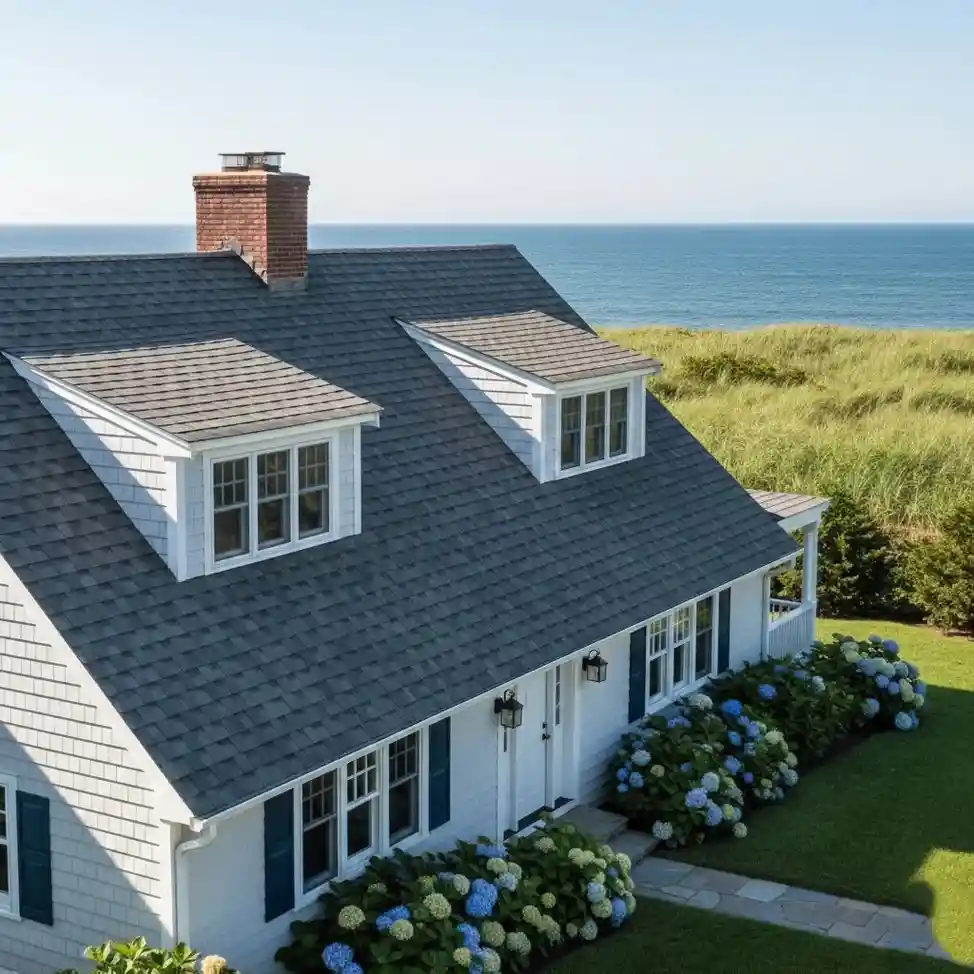
What’s the best way to choose the right roof for your home?
It’s not just about what looks good from the street. The right roof protects your home, affects your energy bills, and can even raise or lower your property value. Things like climate, cost, durability, and architectural style all matter, especially in areas with changing weather like Long Island.
In this guide, we’ll break down the main types of roofs, from classic roof shingle types to modern metal and flat roofing systems. No confusing jargon or sales talk-just clear, practical information to help you understand your options and make a confident choice.
Why Roof Types Matter
Your roof plays a much bigger role than simply blocking rain.
- Home protection & lifespan – A well-chosen roof helps shield your home for many years and performs better when suited to your local climate.
- Energy efficiency – Certain roofing materials reflect heat or provide better insulation, helping reduce heating and cooling expenses.
- Maintenance & repairs – Some roofing systems need routine upkeep, while others require very little ongoing maintenance.
- Curb appeal & property value – The right roof material and design can enhance your home’s appearance and increase its resale value.
That’s why understanding the types of roofing materials matters before making a decision.
Main Types of Roofs by Material
The type of roofing material you choose affects how your roof looks and performs.
- Shingle Roofs
Asphalt shingles remain one of the most popular roofing options for homes in the United States.
Pros
- Affordable and widely available
- Easy to install and repair
- Works with many home styles
Cons
- Shorter lifespan than metal or slate
- Can be damaged by extreme weather
Lifespan & cost
Typically lasts 20–30 years and is one of the cheapest options.
Best use cases
Great for homeowners looking for value and flexibility. This is often the first recommendation by any roofing service in Long Island for budget-conscious projects.
- Metal Roofs
Metal roofing has come a long way from old barn roofs.
Different types of metal roofing
- Standing seam panels
- Metal shingles (made to look like slate or wood)
Benefits
- Extremely durable
- Energy-efficient and reflective
- Fire and wind-resistant
Drawbacks
- Higher upfront cost
- Can be noisy without proper insulation
Ideal climates
Works well in areas with heavy snow, rain, or coastal conditions.
- Tile Roofs
Tile roofs are known for their bold look and long life.
Clay vs concrete
- Clay lasts longer and looks more traditional
- Concrete is more affordable and versatile
Key considerations
- Very heavy—your home must support it
- Long lifespan (50+ years)
Best styles
Spanish, Mediterranean, and Southwestern homes.
- Slate Roofs
Slate is often seen as the luxury option.
Natural vs synthetic slate
- Natural slate can last over 100 years
- Synthetic slate is lighter and cheaper
Pros
- Incredible durability
- High-end appearance
Cons
- Expensive
- Requires skilled installation
Perfect for historic or luxury homes.
- Wood Shake & Wood Shingle Roofs
If you love a natural, rustic look, wood roofing delivers.
Why people choose it
- Warm, natural appearance
- Ages beautifully
Downsides
- High maintenance
- Fire resistance can be an issue
Best climates
Dry areas with fewer fire risks.
- Flat Roofs
Flat roofs aren’t just for commercial buildings anymore.
Common flat roof materials
- EPDM
- TPO
- PVC
Pros
- Modern look
- Easier access for maintenance
Cons
- Drainage must be done right
- Shorter lifespan if poorly installed
Used in both residential and commercial buildings.
Types of Roofs by Shape & Design
When people think about roofs, they usually focus on materials, but shape and design are just as important. The right roof style can improve performance, protect your home from the weather, and make your home’s overall look better. Here are different types:
Gable Roof
A gable roof consists of two sloped sides that come together at the peak in the middle, creating one of the most common roof types. Due to this configuration, the gable roof also allows for optimal drainage of water; however, it is susceptible to damage by high, steady winds.
Hip Roof
A hip roof has four triangular-shaped slopes, giving it even more durability against strong winds. Hip roofs are a favorite among homes because they are stable and provide an attractive, symmetrical shape.
Gambrel Roof
This roof is commonly associated with barn-style architecture. The gambrel roof is defined by two slopes on each side; due to this fact, they also create more living or storage space inside your home. If you want to add storage or living spaces, such as attics or lofts, a gambrel roofing system may be the answer.
Mansard Roof
A Greek-inspired style, a mansard roof has four side slopes with steeper lower slopes and flatter upper slopes. Mansard roofs maximize available vertical living spaces and can add visual drama to any home.
Shed and Modern Roof Styles
Shed and modern roofs utilize a single-slope roof design with sleek, minimalist lines. This type of roof has gained great popularity in contemporary architecture and both provide excellent drainage capabilities while being adaptable to various eco-friendly designs.
Flat Roof vs Pitched Roof
Through this table, you could easily understand the difference between a flat roof and a pitched roof:
| Feature | Flat Roof | Pitched Roof |
| Key Differences | Modern design with usable surface space | Sloped design that sheds water easily |
| Water Drainage | Requires carefully designed drainage systems | Naturally directs water and snow away |
| Upfront Cost | Lower initial installation cost | Higher upfront cost |
| Lifespan | Shorter lifespan if not well maintained | Generally lasts longer |
| Maintenance | Requires regular inspections and upkeep | Lower maintenance overall |
| Best For | Modern homes and commercial buildings | Most residential homes |
| Long-Term Value | Cost-effective short term | Safer long-term investment |
For most homes, pitched roofs are still the safer long-term option.
Choosing the Right Roof for Your Home
Before you decide, think about:
- Climate – Snow, wind, rain, and heat matter
- Budget vs lifespan – Cheap now vs savings later
- Local building codes – Especially important in Long Island
- Style – Your roof should match your home’s design
A trusted local contractor can help narrow this down.
Roof Types Comparison Table
This table compares common roofing materials based on lifespan, cost, maintenance needs, and best use.
| Material | Average Lifespan | Cost Range | Maintenance | Best Use |
| Asphalt Shingles | 20–30 yrs | Low | Low | Most homes |
| Metal Roofing | 40–70 yrs | Medium–High | Low | Coastal & modern homes |
| Tile Roofing | 50+ yrs | High | Low | Mediterranean styles |
| Slate Roofing | 75–100+ yrs | Very High | Low | Luxury homes |
| Wood Shake | 25–40 yrs | Medium | High | Rustic designs |
| Flat Roofing | 15–30 yrs | Medium | Medium | Modern homes & commercial |
FAQS
What is the most common type of roof?
The most popular roofing type is asphalt shingles. Their affordability and straightforward installation make them a popular choice.
Which roof type lasts the longest?
The longest-lasting roofing type is still natural slate, which can last over 100 years if installed correctly.
What is the cheapest roofing option?
Asphalt shingles are usually the most budget-friendly roofing option for homeowners. They offer reliable protection at a lower upfront cost compared to most other roofing materials.
Are flat roofs good for residential homes?
Flat roofs are a good type of roof for residential homes if they are appropriately designed and maintained. They are often found in contemporary housing.
Conclusion
After getting to know the various categories of roofs, you can feel less stressed about finding just the right roof type. There are traditional roof shingle types as well as metal and flat roofs. All roof types have their own advantages. The most significant factor in selecting a roof should be based on the type of climate where you live, how much money you have available for roofing, and what your preferred home appearance will be.
Before starting any roofing project (repair/replacement), it’s wise to use an expert roofer or a trusted roofing service Long Island to inspect your current roof, provide you with appropriate roofing options, and offer guidance in selecting a roofing system that will protect your home and enhance its exterior for many years. Local experts like Skyscape Roofing can be helpful to you with your roofing project.
After reading this content, explore Skyscape’s resources to continue your research on roofing and home improvement.
